YouTube New Monetization Policy 2027: What Creators Need to Know
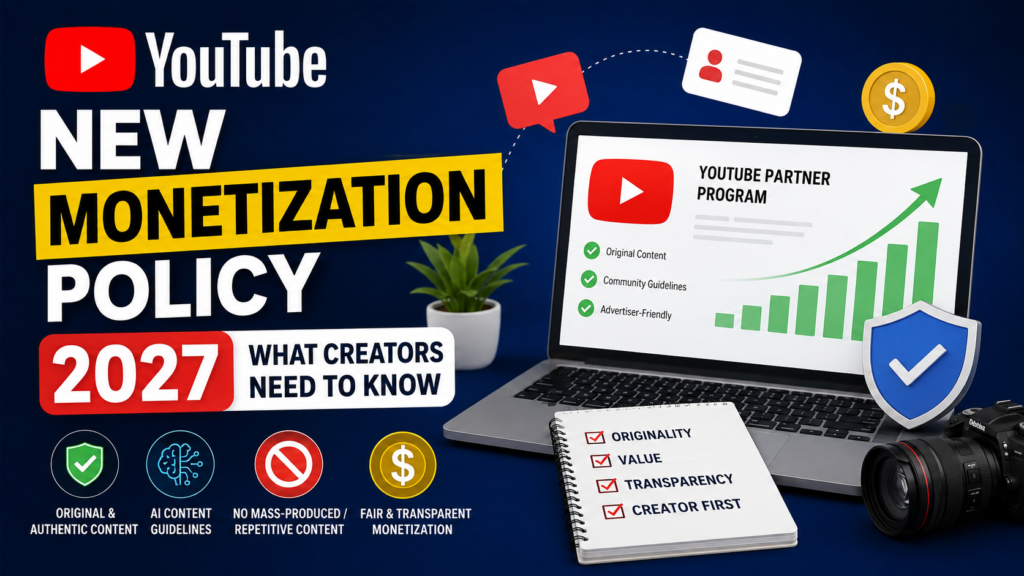
What You Should Know Before Monetizing on YouTube in 2027
If you want to earn from YouTube in 2027, original and valuable content will be very important. YouTube’s monetization guidelines focus on content that gives viewers real value instead of repetitive or mass-produced videos.
Quick points to remember:
- Create original and useful content for your audience.
- Avoid uploading many videos using the same template or format with very little change.
- AI content is not automatically banned, but it should add real value.
- Add your own research, commentary, storytelling or editing.
- Reused content should have meaningful original contribution.
- Focus on quality instead of only increasing the number of uploads.
- Always check YouTube’s latest monetization guidelines because policies can change.
Table of Contents
If you are a YouTuber and your main aim is to earn money from YouTube, then monetization policy is something you should always keep an eye on. Because YouTube keeps updating its policies according to the type of content people are uploading and watching.
There is a lot of discussion about YouTube’s new monetization policy 2027, especially around AI videos, repetitive content and mass-produced videos.
But before we start, one thing is important. As of now, YouTube’s official monetization guidance does not confirm a separate new 2027 monetization policy. The latest major clarification was made in July 2025, when YouTube renamed “repetitious content” as “inauthentic content” and clarified that repetitive or mass-produced content can be ineligible for monetization.
So, if you are planning your YouTube channel for 2027, understanding these rules is very important.
What is YouTube Monetization?
YouTube monetization means earning money from your YouTube content when your channel is accepted into the YouTube Partner Program (YPP) and meets YouTube’s monetization policies.
There are different ways creators can earn money on YouTube, including advertising revenue and other monetization features available through YPP. But getting views is not the only thing. Your content also needs to follow YouTube’s policies.
This means if your video gets views but the content is not considered suitable for monetization, then earning money from that video can become difficult.
What is the Main Change Creators Should Understand?
The important thing is original and authentic content.
YouTube says monetized content should be original and should not be mass-produced, generic or repetitive. If every video on a channel looks almost the same and only small things are changed, then that content can have a problem with monetization.
For example, if someone is making 50 videos using the same template, same type of narration, same images and only changing the topic or few words, then this can look like mass-produced content.
So going into 2027, creators should not only think:
“How many videos can I upload?”
They should also think:
“What new value am I giving to the viewer in every video?”
Is AI Content Banned on YouTube?
This is one of the biggest questions creators have.
The answer is No, AI itself is not banned for monetization.
YouTube has clearly said that creators can use AI tools to improve their storytelling. However, the content still needs to follow YouTube’s monetization policies. If realistic content is altered or synthetically generated, creators may also need to disclose it.
So if you are using AI for:
Getting video ideas
Writing or improving a script
Creating graphics
Improving storytelling
Supporting your editing
then simply using AI does not automatically mean your channel will lose monetization.
The main problem comes when AI is used to create generic, repetitive and mass-produced content without adding your own value.
What Type of Content Can Create Problems?
If your videos are highly repetitive, interchangeable and provide very little original value, then monetization can become difficult.
YouTube gives examples such as repetitive content with low educational value, templated storylines, image slideshows or scrolling text with very little narration, commentary or educational value.
For example:
Video 1: “5 facts about India”
Video 2: “5 facts about America”
Video 3: “5 facts about Dubai”
If all three videos are created using exactly the same template, same AI voice, same type of images and almost the same structure without meaningful original value, then the channel can look mass-produced.
But if you research the topic properly, add your own explanation, examples, opinions, editing and useful information, then the content becomes more valuable to viewers.
What About Reused Content?
Reused content is another important topic for YouTubers.
YouTube has said that the July 2025 clarification about inauthentic content did not change its reused content policy. Commentary, clips, compilations and reaction videos can still be monetized when creators add significant original commentary, modifications, educational value or entertainment value.
So simply using somebody else’s video and uploading it again is not a good monetization strategy.
If you are using someone else’s content, you should make sure you have the necessary rights and add meaningful original value.
What Should You Do If You Use AI Videos?
If you are an AI content creator, then don’t panic.
Instead, focus on making your videos more original.
You can:
Add your own research
Add your own voice or meaningful commentary
Give examples
Create your own storytelling
Edit the video properly
Add educational information
Give your own perspective
Avoid uploading hundreds of nearly identical videos
The simple rule is:
AI can be a tool, but your content should still have a human and original value.
YouTube Also Checks Your Channel
One more important thing is that YouTube does not only look at one video.
When reviewing a channel for monetization, YouTube may look at the channel’s main theme, most-viewed videos, newest videos, videos responsible for a large part of watch time, metadata such as titles, thumbnails and descriptions, and the About section.
So if one video is original but most of your channel is repetitive or low-value content, that can still create a problem.
This is why you should check your complete channel instead of focusing only on one video.
What Should You Do Before 2027?
If you want to build a monetized YouTube channel for 2027, then start improving your content from now itself.
First, check your old videos.
If you have many videos that are almost the same, then review whether they actually provide different value to viewers.
Second, don’t blindly follow AI content trends.
Just because one type of AI video is getting views does not mean you should create hundreds of similar videos.
Third, focus on your audience.
Ask yourself:
“Why should someone watch my video instead of another video on the same topic?”
If your answer is your research, explanation, personality, experience, storytelling or unique presentation, then you are moving in the right direction.
Conclusion
So, if you are searching for YouTube new monetization policy 2027, remember that there is currently no official separate 2027 policy announced in the YouTube guidance I found. The important direction creators should understand is the existing focus on original, authentic and valuable content, especially after YouTube’s 2025 clarification around repetitive and mass-produced content.
AI is not automatically a problem. Reused content is not automatically banned either. The main thing is the value you are adding to your content.
So going into 2027, don’t just focus on uploading more videos.
Focus on creating better videos.